
Channel vs Chanel: What’s the Difference? Meaning, Spelling & Usage
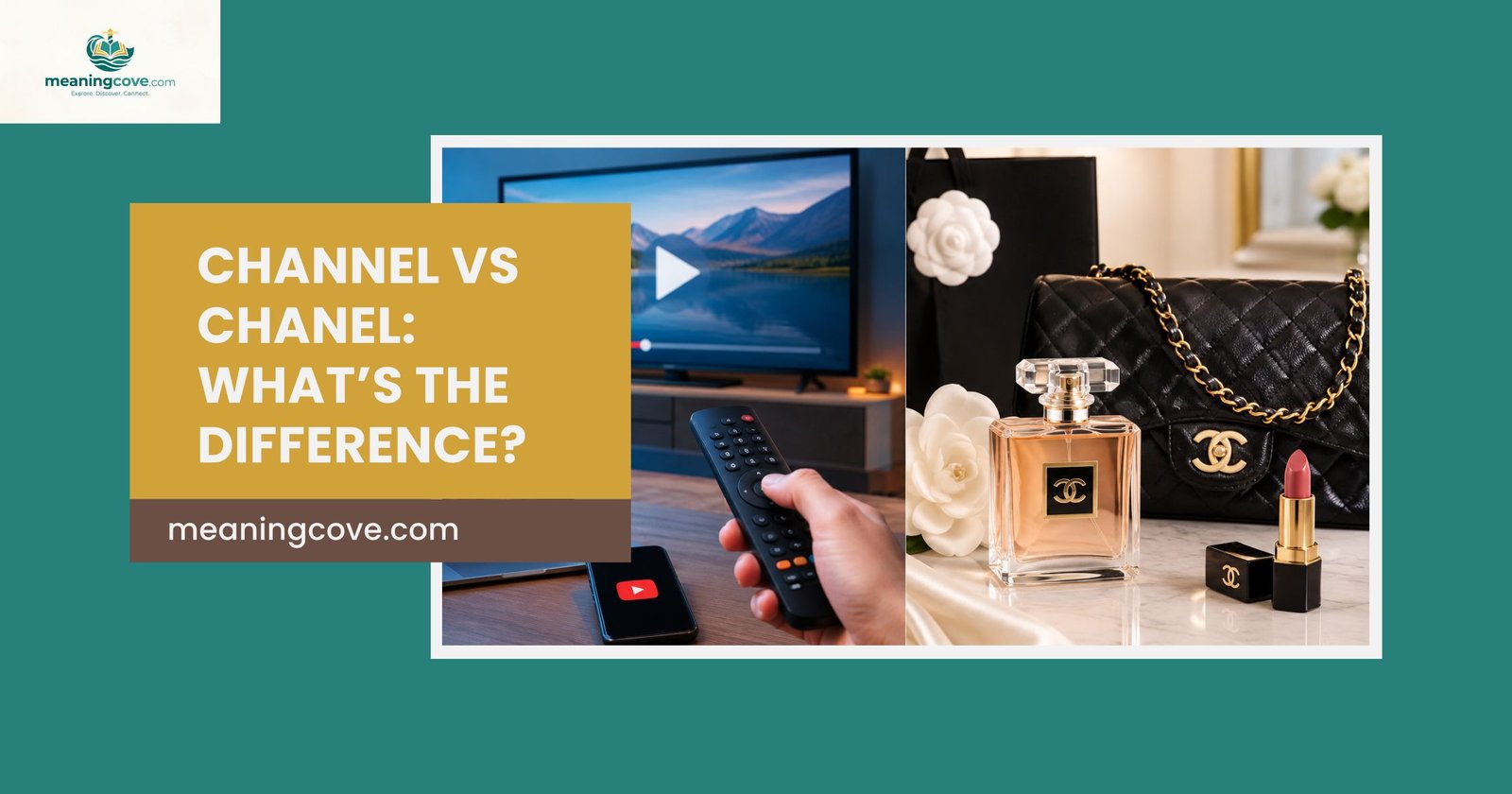
If you think Channel vs Chanel is merely a typo, think again! “Channel” pertains to pathways or platforms, such as a streaming channel, while “Chanel” evokes images of high fashion and sophistication, like the fashionable Chanel handbag. This confusion is common, especially with the prominence of both terms in everyday language.
In this article, we’ll unpack their meanings, correct pronunciations, and showcase examples to clarify the distinctions. Expect to learn about common mistakes and handy memory aids that will help you easily differentiate these words!
Channel vs Chanel: Quick Overview
The main difference between “channel” and “Chanel” is their meaning and use. “Channel” refers to a medium for communication or a pathway for conveying information, while “Chanel” specifically denotes the iconic luxury fashion brand founded by Coco Chanel. Understanding this difference can boost clarity in conversations and writing.
| Feature | Channel | Chanel |
|---|---|---|
| Meaning | Medium or pathway | Luxury fashion brand |
| Word Type | Noun | Proper noun |
| Common Use | Communication, media | Fashion industry |
| Spelling | C-h-a-n-n-e-l | C-h-a-n-e-l |
| Example | “He used a new channel for marketing.” | “She wore a stunning Chanel dress.” |
For example, one might say, “I’ll watch that show on my favorite streaming channel,” or share, “My friend just bought a beautiful Chanel handbag.”
A simple way to remember: Channel = communication or pathway; Chanel = fashion and luxury. This distinction can help you navigate discussions effortlessly.
Why Do People Confuse Channel and Chanel?
The confusion between Channel and Chanel often arises due to their similar spellings and pronunciations. Both words appear quite alike, leading many to mistakenly interchange them in conversations or writing.
However, it’s essential to note that they serve entirely different purposes. Channel is a common English term for a communication medium, such as a television channel, while Chanel refers to the renowned French luxury brand made famous by Coco Chanel.
For instance, one might say, “I watched a documentary on a travel channel,” whereas a statement like, “I adore my new Chanel handbag” refers to a specific fashion label.
What Does ‘Channel’ Mean?
A “channel” refers to a pathway, route, or medium used for communication. It encompasses various platforms through which information flows, allowing ideas to connect.
Common uses of the term include TV and media channels, YouTube channels, communication channels in business, marketing channels for products, and natural waterways for navigation. Each context highlights the essential role channels play in conveying messages or facilitating connection.
For example, “The news channel provided updates on global events,” and “She created a channel to share her art.” Understanding channel meaning is crucial, especially when distinguishing between Channel vs Chanel, as their implications differ significantly.
Common Uses of the Word Channel
- TV and Media: In broadcasting, a “channel” signifies a specific frequency or station dedicated to transmitting content.
- YouTube and Social Media: Creators use “channel” to describe their personalized platforms for sharing videos or content with audiences.
- Communication: Channels describe the various methods, like email or messaging apps, through which people exchange information effectively.
- Marketing: In marketing, channels represent the platforms, like social media or email, used to connect and engage with customers.
- Waterways: A channel can also refer to a natural or artificial waterway facilitating navigation.
These diverse meanings highlight the intriguing distinction between “Channel vs Chanel,” emphasizing the versatility of the word across different contexts.
The History of Chanel
Coco Chanel, a visionary designer, founded the Chanel fashion house in 1910, revolutionizing women’s fashion with her innovative ideas. The brand quickly evolved from a small hat shop into a leading luxury name, introducing groundbreaking designs like the iconic Chanel suit.
Chanel’s influence spans clothing, perfumes like Chanel No. 5, elegant handbags, and cosmetics, shaping the world of modern fashion. Today, it remains a symbol of luxury and timeless style, reflecting sophistication and confidence that transcends generations. Chanel’s legacy goes on inspiring new talent in the fashion industry.
Famous Chanel Products
- Chanel No. 5: Launched in 1921, Chanel No. 5 is an iconic fragrance that embodies luxury and timeless elegance, captivating generations.
- Handbags: Chanel’s handbags, particularly the Classic Flap and Boy Bag, symbolize the allure of high fashion, sought after by style aficionados.
- Clothing and Accessories: The brand’s clothing lines, along with exquisite shoes, jewelry, and sunglasses, redefine chic, blending modernity with classic aesthetics.
- Beauty Products: Chanel’s makeup and skincare collections reflect the essence of luxury, offering a range of high-performance items that enhance natural beauty effortlessly.
Channel vs Chanel: Pronunciation
Channel Pronunciation
“Channel” is pronounced as /ˈʧæn.əl/, emphasizing its two syllables. The first syllable sounds like “chan,” rhyming with “man,” making it easy to say smoothly.
Chanel Pronunciation
In contrast, “Chanel” is pronounced as /ʃəˈnɛl/, reflecting its French roots. The initial sound is softer, like “shuh,” giving it a sophisticated flair.
Key Difference
While both words share similar spellings, their pronunciations diverge significantly. This discrepancy often leads to confusion, particularly for newcomers to the terms.
Remember to pronounce each word correctly according to context.
Channel vs Chanel: Spelling Differences
Channel is spelled with two “n” letters, making it a common English word often used in various contexts, like media or waterways. In contrast, Chanel contains just one “n” and primarily refers to the iconic luxury brand known for fashion and fragrance.
To distinguish between Channel vs Chanel, remember that the missing “n” in Chanel signifies its unique identity as a brand. Visualizing Chanel’s luxurious allure might help solidify this spelling in your mind.
For a simple memory tip, associate the extra “n” in channel with its broader meanings, while Chanel represents exclusive elegance.
Channel vs Chanel: Grammar and Word Type
Channel as a Noun
“Channel” primarily functions as a noun, referring to a pathway for communication or movement. For example, one might tune into a specific television channel.
Channel as a Verb
As a verb, “channel” means to direct or guide energy, emotions, or resources towards a particular aim or purpose.
Chanel as a Proper Noun
Conversely, “Chanel” is a proper noun, typically associated with the renowned luxury brand founded by Coco Chanel.
Key Difference
In summary, while “channel” serves as both a noun and a verb, “Chanel” specifically denotes a brand, helping to differentiate the two terms effectively.
Common Mistakes When Using Channel and Chanel
One common spelling mistake occurs when individuals accidentally write “Chanel” instead of the general term “channel.” This confusion frequently stems from the similarity in pronunciation and usage.
Contextually, mixing up the luxury brand “Chanel” with terms like communication, TV, or YouTube channels can lead to significant errors.
For instance, saying “I need to check my Chanel for updates” should be “I need to check my channel for updates.” Remember, “Chanel” refers to fashion, while “channel” involves communication.
Quick tip: Associate “channel” with “communicate,” since both start with “C” to prevent confusion.
Channel vs Chanel: Real-Life Examples
When discussing channels, you might say, “I launched a new YouTube channel” or “The television channel airs tonight’s game.” Other examples include “communication channel” in marketing or “social media channel” for engagement.
Conversely, when you mention Chanel, think of phrases like “She wore a stunning Chanel dress” or “I adore Chanel No. 5 perfume.” Another example is “The iconic Chanel handbag is timeless.”
The surrounding context clarifies whether you’re talking about various mediums or the luxurious fashion brand. Always check the meaning before choosing the spelling!
Channel vs Chanel in Digital Marketing
A marketing channel refers to the various platforms businesses employ to connect with customers, enhancing reach and engagement. Different strategies maximize exposure through these channels.
Common marketing channels include social media, email, websites, search engines, and paid advertising, each serving unique purposes and audiences. Embracing a mix ensures broader visibility and customer interaction.
For example, a brand might use Facebook ads as a channel to target millennials, while email newsletters reach existing customers. Remember, the term “channel” here is distinct from the luxury fashion brand Chanel.
Multi-Channel vs Omnichannel
Multi-Channel Meaning
Multi-channel marketing involves utilizing various platforms — like social media, email, and physical stores — to engage customers. Businesses leverage multiple avenues to enhance their outreach.
Omnichannel Meaning
Conversely, omnichannel seamlessly integrates all customer touchpoints, creating a cohesive brand experience. This approach ensures that interactions are consistent, regardless of the channel used.
Key Difference
The primary distinction lies in connection. Multi-channel is diverse but disconnected, while omnichannel provides a unified journey. For example, a customer may first see a product on Instagram and later purchase it in-store, maintaining brand consistency throughout.
Understanding these terms clarifies discussions about marketing strategies, helping mitigate confusion — especially when distinguishing between channel vs Chanel!
Channel vs Chanel in British and American English
Channel Usage
In both British and American English, “channel” refers to a pathway or medium for communication, water, or broadcasting. Its spelling and meaning remain consistent across the two dialects.
Chanel Usage
Meanwhile, “Chanel,” the luxury fashion brand founded by Coco Chanel, retains its spelling and significance universally. This proper noun transcends regional variations in language.
Pronunciation and Context
Although the pronunciation remains unchanged, some cultural references or contexts might vary. For example, British and American audiences may associate Chanel with different lifestyle aspects.
Final Tip
Remember, the choice between “channel” and “Chanel” hinges on context rather than regional spelling differences.
Learn the difference between dysregulated and disregulated, including their meanings, correct usage, and common mistakes.
Frequently Asked Questions About Channel vs Chanel
What is the Difference Between Channel and Chanel?
Channel refers to a medium for communication; Chanel is a luxury fashion brand founded by Coco Chanel.
Is Chanel a Type of Channel?
No, Chanel is a specific brand, while channel relates to communication methods or pathways.
How do you Remember the Spelling?
Remember “Chanel” has an “a” for “artist” — Coco Chanel was a famous fashion artist.
Which Word is Used in Media?
Channel is commonly used in media to refer to platforms like TV, radio, or online networks.
Can Chanel Products be Considered a Channel?
No, Chanel products are luxury items. They do not serve as communication channels.
Which Term is used for Water Pathways?
Channel is used when referring to water bodies like rivers or streams.
Final Thoughts
In summary, “channel” signifies a route or medium for communication, while “Chanel” refers to the renowned luxury brand. Their similar spellings can lead to misunderstandings, but context helps clarify their meanings.
Keep in mind the spelling difference, and use “channel” when discussing media and “Chanel” when referencing the brand. This awareness will improve your writing and ensure precision. Ultimately, choosing the right term enhances clarity and enriches your communication. Stay informed and make every word count!