
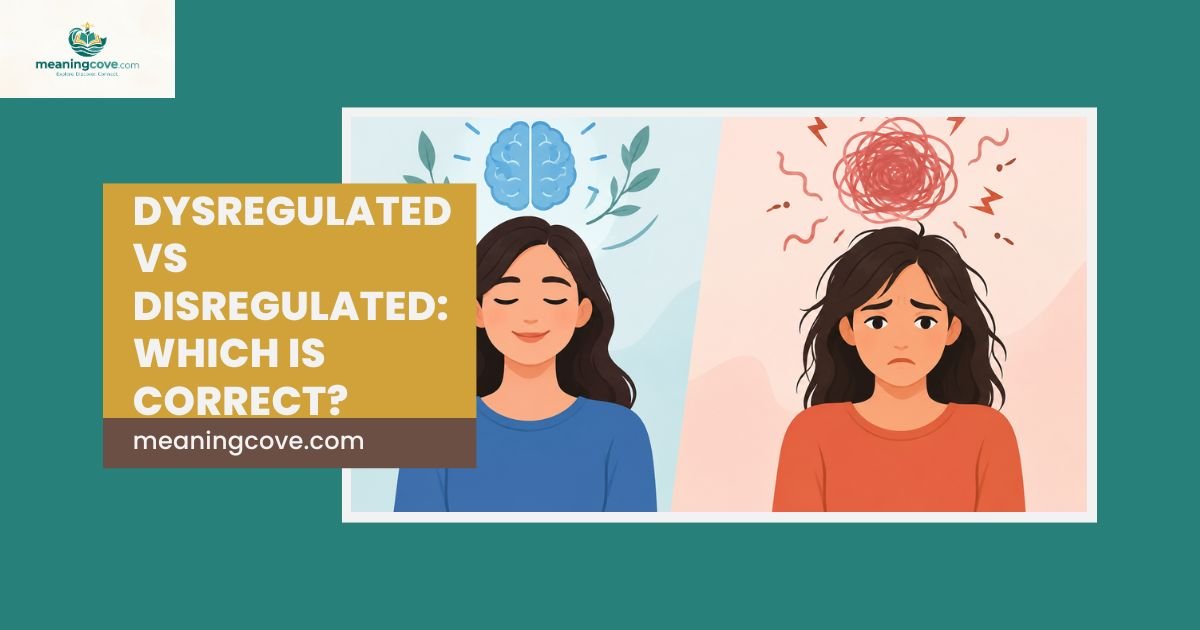
Dysregulated vs Disregulated: The Real Difference, Correct Usage, and Why It Matters
Inevitably, anyone engrossed in psychology or medical literature has faced the puzzling duo of “dysregulated” and “disregulated.” Their similarity can create significant confusion, yet understanding their distinct meanings is essential for effective communication.
The term “dysregulated” has garnered widespread acceptance, especially in professional writing, while “disregulated” is often overlooked. The good news? By examining the prefixes and the contexts these terms inhabit, you can easily differentiate between them.
This article will explore the exact meanings, key differences, and common pitfalls you might encounter, along with practical examples and memory strategies about dysregulated vs. disregulated.
Dysregulated vs Disregulated: The Quick Difference
“Dysregulated” is the preferred and widely accepted term, while “disregulated” is much less common and generally avoided in professional writing. Dysregulated refers to an imbalance in emotional or physiological states, often seen in psychological contexts.
On the other hand, disregulated isn’t formally recognized and can lead to confusion. Understanding the difference is essential, particularly in academic and clinical settings.
| Word | Meaning | Common Context | Preferred Usage |
|---|---|---|---|
| Dysregulated | Imbalance in emotional or physiological state | Mental health, psychology | High |
| Disregulated | Incorrectly used; implies a lack of regulation | Rarely used, often considered incorrect | Low |
In discussions around mental health, it’s vital to recognize when someone is dysregulated rather than merely disregulated.
For example, “During stressful moments, she often feels dysregulated, unable to manage her emotions.” Another usage might be, “Therapists focus on strategies to help clients avoid dysregulated responses.”
What Does Dysregulated Mean?
Dysregulated means a state where something, often emotions or behaviors, is not functioning as it should. In psychology and medicine, it refers to difficulties in managing emotions, leading to anxiety or mood swings. Understanding the dysregulated meaning can help individuals recognize signs of mental health issues.
For example, a person can feel dysregulated when overwhelmed by stress, making it hard to concentrate. A child might exhibit dysregulated behavior after a disruption in routine, showing sudden outbursts. Adults may find their emotions dysregulated during significant life changes, leading to irritability.
Someone with dysregulated impulses might engage in reckless decisions without thinking. Lastly, if thoughts become dysregulated, it can result in confusion and difficulty in decision-making.
| Term | Meaning |
|---|---|
| Dysregulated | Functioning in an impaired or poorly controlled way |
| Dysregulation | The state or process of impaired regulation |
Dysregulated in Real Sentences
Emotional context
- The child became emotionally dysregulated after the argument.
- Trauma can leave people feeling constantly dysregulated.
- Anxiety can lead to dysregulated emotional responses.
Medical context
- Chronic stress is sometimes described as leaving the nervous system dysregulated.
- The report noted signs of immune dysregulation.
- Hormonal dysregulation can affect sleep and metabolism.
Workplace context
- Burnout can leave employees feeling mentally dysregulated and exhausted.
- Dysregulated stress responses can make concentration harder.
Parenting context
- Young children can become dysregulated when routines change suddenly.
- Sensory overload can contribute to dysregulated behavior in some autistic children.
What Does Disregulated Mean?
Here’s where the confusion starts. “Disregulated” appears now and then in informal writing, and some people treat it as a variant spelling. In professional and clinical English, though, it’s rare, and most writers in those fields avoid it.
Part of the problem is the prefix. Dis- typically means:
- The opposite of
- Removal of
- Lack of
- Separation from
That makes “disregulated” read as though regulation has been removed entirely, whereas “dysregulated” specifically points to regulation that is impaired or abnormal. That subtle difference is a big reason clinicians prefer “dysregulated.”
Why “Disregulated” Looks Off to Experts
Medical and psychological vocabulary already leans heavily on the dys- prefix, so “disregulated” stands out as unfamiliar.
| Standard Term | Common Misspelling |
|---|---|
| Dysfunction | Disfunction |
| Dyslexia | Dislexia |
| Dysphoria | Disphoria |
| Dysregulation | Disregulation |
In professional writing, “disregulated” can signal that the writer isn’t familiar with the field’s standard vocabulary.
Dysregulated vs Disregulated: The Core Difference
| Feature | Dysregulated | Disregulated |
|---|---|---|
| Used in psychology | Yes | Rarely |
| Common in medical writing | Yes | No |
| Used by therapists | Yes | Rarely |
| Found in research literature | Frequently | Rarely |
| Recommended for professional writing | Yes | No |
The verdict: for academic writing, mental health content, medical discussion, educational material, or therapy-related writing, use dysregulated.
Why Professionals Use “Dysregulated”
Medical terminology prizes precision, and one prefix can change a meaning completely. “Dysregulated” caught on because it describes a system that still works but isn’t regulating well.
That distinction matters. A dysregulated nervous system, for example, is still operating. It may overreact, underreact, or respond inconsistently. That’s different from a system that has stopped working altogether, and the word captures the difference without sounding like a judgment.
Emotional Dysregulation Explained
Emotional dysregulation refers to difficulty managing emotional responses in a balanced, flexible way. People who experience it may:
- React strongly to minor stressors
- Struggle to calm down afterward
- Feel overwhelmed easily
- Experience rapid mood shifts
- Act impulsively when emotions run high
None of this means someone is weak or irrational. For many people, patterns like these reflect a nervous system that adapted to prolonged stress, instability, or overstimulation.
Common Signs
Intense emotional reactions. Small events may trigger disproportionately strong feelings, such as panic after mild criticism or intense anger over a minor delay.
Difficulty self-soothing. Some people have trouble settling after stress. They may replay conversations, stay upset for hours, or feel emotionally stuck.
Impulsivity. Emotional overwhelm can make decisions harder, which may lead to angry outbursts, sudden quitting, impulsive spending, or heated arguments.
Mood instability. Emotions may shift quickly, from calm to irritated to overwhelmed, which can be exhausting.
Conditions Often Linked to Dysregulation
Emotional dysregulation is discussed in connection with a range of conditions. A connection doesn’t mean it’s present in everyone with a given condition, and it doesn’t mean dysregulation is a diagnosis by itself.
| Condition | Connection to Dysregulation |
|---|---|
| ADHD | Difficulty with attention and emotional control |
| PTSD | Heightened threat responses |
| Anxiety disorders | Persistent nervous system activation |
| Autism spectrum | Sensory and emotional overload |
| Borderline personality disorder | Emotional intensity and instability |
| Bipolar disorder | Disruption in mood regulation |
Nervous System Dysregulation
The nervous system constantly monitors safety, danger, and stimulation. When it works well, it moves flexibly between activation and rest. When it’s described as dysregulated, that flexibility is reduced, and the body may stay in a heightened state for too long.
Fight, Flight, Freeze, and Fawn
These four terms are a popular framework for describing stress responses. They’re widely used in trauma-informed discussions, though they’re a descriptive model rather than a precise clinical measurement.
| Response | Common Presentation |
|---|---|
| Fight | Anger, defensiveness, irritability |
| Flight | Anxiety, overworking, restlessness |
| Freeze | Numbness, shutdown, disconnection |
| Fawn | People-pleasing, conflict avoidance |
Symptoms People Associate With It
Physical: fatigue, headaches, muscle tension, digestive issues, sleep disruption, a racing heartbeat.
Mental: brain fog, hypervigilance, panic, emotional overwhelm, difficulty focusing.
Behavioral: social withdrawal, irritability, impulsiveness, cycles of burnout.
Many of these symptoms have other possible causes, so a medical professional is the right person to sort out what’s behind them.
How Trauma and Stress Relate to Dysregulation
Trauma can change how the brain and body judge safety. When someone experiences repeated stress, neglect, instability, or chronic fear, their nervous system may adapt in ways that help them survive at the time.
Those adaptations can persist after the danger has passed. A person who grew up in an unpredictable environment, for example, may stay highly alert to criticism, conflict, or uncertainty as an adult, because their system learned to stay on guard.
Chronic everyday stress can play a part too. Poor sleep, financial pressure, work demands, isolation, relationship conflict, and constant notifications can all keep the body activated, making it harder to return to a calm baseline.
Hormonal and Biological Dysregulation
The word isn’t limited to emotions. The body has many regulatory systems, and clinicians use “dysregulation” when one of them stops keeping balance well.
Hormonal dysregulation. Hormones influence sleep, energy, stress, mood, and appetite. Discussions of hormonal dysregulation may involve stress hormones, thyroid function, insulin, or reproductive hormones.
Blood sugar dysregulation. When blood sugar isn’t well regulated, people may notice energy crashes, fatigue, irritability, or hunger spikes. This is one reason nutrition and mood are often discussed together.
Immune dysregulation. Researchers use the term for immune systems that respond abnormally. In autoimmune conditions such as lupus, rheumatoid arthritis, and multiple sclerosis, the immune system mistakenly attacks the body’s own tissues. Scientists also study links between chronic stress and immune function.
Why People Search for “Disregulated”
Many people search for “disregulated” every month. A few reasons explain it:
- Prefix confusion. People are familiar with “dis-” from words like disconnected, disorganized, and disoriented, so “disregulated” feels natural.
- Autocorrect and spellcheck. Tools don’t always handle specialized psychology vocabulary well.
- Social media. Informal spellings spread quickly on TikTok, Reddit, and Instagram, and a mistake repeated often enough can start to look right.
Dysregulated vs Unregulated vs Deregulated
These three look alike but mean quite different things.
| Word | Meaning | Common Context |
|---|---|---|
| Dysregulated | Functioning abnormally or poorly controlled | Psychology, medicine |
| Unregulated | Not subject to regulation | Markets, industries |
| Deregulated | Regulations removed | Economics, law |
Examples:
- A dysregulated child has trouble managing big emotions.
- An unregulated market has no government oversight.
- An industry that has been deregulated has had previous rules removed.
How to Use Dysregulated Correctly
Clinical writing: “The patient described dysregulated emotional responses.”
Educational settings: “Students may become dysregulated in overstimulating environments.”
Parenting content: “Dysregulated children often need calming support before problem-solving.”
Workplace wellness: “Prolonged burnout can contribute to dysregulated stress responses.”
Incorrect: “The patient became disregulated during the session.”
Better: “The patient became dysregulated during the session.”
Common Spelling Mistakes
| Incorrect | Correct |
|---|---|
| Disregulated | Dysregulated |
| Disregulation | Dysregulation |
| Dys-regulated | Dysregulated |
| Dysregulaited | Dysregulated |
Even experienced writers slip on this term, since it looks unusual on the page.
Learn the difference between currier and courier with simple definitions and examples.
How Therapists Use the Word
Mental health professionals tend to use “dysregulated” to describe a specific state rather than a character trait. They might say someone is dysregulated when that person:
- Is emotionally flooded
- Is struggling to think through a problem calmly
- Has temporarily lost emotional control
- Has moved into a survival response
Used well, the word is descriptive rather than judgmental. It helps explain what’s happening in the body and mind without blaming the person.
A Real-World Example
Imagine a manager gives mild feedback in a meeting. One employee feels a bit uncomfortable but stays steady. Another experiences a racing heart, panic, anger, shame, and trouble thinking clearly.
Why the difference? Stress, burnout, poor sleep, anxiety, or past experiences can all affect how strongly someone’s nervous system reacts. The second employee’s reaction involves real physiological activation. It isn’t simply being dramatic.
Supporting Healthy Regulation
Healthy regulation doesn’t mean suppressing feelings. It means responding to them flexibly. Strategies that people often find helpful include:
- Slow, deep breathing
- Physical movement
- Consistent, adequate sleep
- Grounding exercises
- Mindfulness practices
- Social support
- Therapy
For people who experience severe or persistent dysregulation, professional support from a doctor or therapist is the right next step.
Co-Regulation
Humans don’t regulate emotions entirely alone. Co-regulation is the process by which calm, safe interactions help another person’s nervous system settle. It helps explain why supportive parenting, healthy relationships, and safe environments make emotional control easier.
Dysregulation in Children, ADHD, and Autism
Children. Young children often show dysregulation through behavior before they can explain how they feel. Signs may include meltdowns, aggression, withdrawal, crying, trouble with transitions, and sensory overwhelm. Many modern parenting and education approaches focus on calming and supporting the child first, since punishment alone doesn’t settle an overwhelmed nervous system.
ADHD. ADHD involves more than attention. Many people with ADHD also experience emotional impulsivity, low frustration tolerance, rejection sensitivity, and stress overwhelm, and researchers increasingly treat emotional dysregulation as an important part of the picture for many people.
Autism. Autistic people may become dysregulated because of sensory overload, social exhaustion, unexpected change, or communication stress. What an outsider sees as overreacting is often a response to being overwhelmed, and understanding that makes support more effective.
Why Word Accuracy Matters
Language shapes understanding, and in mental health writing, precision matters. Using the standard term:
- Improves communication
- Reduces misinformation
- Supports accurate education
- Builds credibility
“Dysregulated” points clearly to a recognized clinical concept. “Disregulated” tends to add unnecessary confusion.
Quick Reference Cheat Sheet
| Question | Answer |
|---|---|
| Is “dysregulated” a real word? | Yes |
| Is “disregulated” frequent in professional writing? | No |
| Which term do therapists use? | Dysregulated |
| Is dysregulation a diagnosis on its own? | Usually not |
| Can stress contribute to dysregulation? | Yes |
| Is dysregulation treatable? | Often, with the right support |
FAQs
Is “dysregulated” a Medical Term?
Yes. Medical and psychological professionals use it widely in clinical, research, and therapy settings.
Is “disregulated” Grammatically Wrong?
It isn’t always impossible, but it’s rarely considered correct in modern psychological or medical writing, so “dysregulated” is the safer choice.
Why do Therapists use “dysregulated”?
It describes emotional and nervous system overwhelm accurately without shaming the person experiencing it.
Can Anxiety Cause Emotional dysregulation?
Chronic anxiety keeps the nervous system activated, which can make emotional regulation harder.
Is dysregulation the same as Mental illness?
No. Dysregulation can occur with or without a formal diagnosis.
Conclusion
The debate over dysregulated vs disregulated comes down to the prefix. Dysregulated is the accepted clinical and professional term, and it describes impaired or abnormal regulation in emotional, neurological, hormonal, or behavioral systems. Disregulated appears occasionally online, but professionals rarely use it because it lacks the precision their fields require.
The word’s growing popularity also reflects a broader shift in how people talk about mental health. Emotional overwhelm, trauma responses, and chronic stress are increasingly understood as physiological experiences rather than character flaws. And sometimes, a single prefix makes that difference.